
The city that cannot be overhyped
Plus, AI pushing users to pick more expensive travel options; a very bad prediction about travel in 20 years, and Southwest's surprising endurance

If you loved a place the first time you visited, one of the riskier things you can do is go again. Those treasured memories, grown only more rosy with each passing year, are put at risk on the chance that some concoction of circumstances—weather, people, your headspace, etc—might not be replicated.
Leaving those beloved memories to grow ever more romanticized with time is the safe bet.
That fear of being disappointed a second go-round was on my mind this last week because I was returning to Vancouver, a city whose charms so thoroughly seduced me that I wrote about it nearly two years ago.
Vancouver’s encore performance was owed to a terrifying proposition—I was moderating a panel at Web Summit with the Chief Animal Officer of Colossal Bioscience, the firm pursuing the de-extinction of species like the woolly mammoth, dodo, and Tasmanian tiger. (If you want to watch that interview, you can click here or watch below and scroll to 51:40ish.)
I gave myself a few days before and after the conference to revisit highlights from my previous time, and see more of the surrounding area. Those handful of days snatched out of a busy schedule were spent biking, lounging on a beach, walking, hiking, swimming, and reading and writing in a cottage on a cove.
I can’t say I found any hidden gems or cracked the Vancouver dining scene. The stores, neighborhoods, beaches, and idyllic little seaside towns I visited would surprise no one. My sole interesting observation this time around is that rhododendrons in every color and shade imaginable play the role here that hydrangeas do in the northeast.
But I would happily come back to Vancouver again and again and again to do all of it once more. It is now a city that does not disappoint. In fact, it might just be the world’s ultimate lifestyle city.
Or, as one friend who travels a lot wrote to me: “It is everything Seattle thinks it is.” 😳
Highlights of my week:
-Deep Cove. A cinematic little village where you can imagine wearing chunky sweaters and staring out your window. Bring a bathing suit as the water is incredibly clear on a sunny day.


-I rode my bike three times to Tower Beach. I love sitting there against a log and reading. The old men (always old men) walking by naked don’t bother me much, and the water is warm enough already to swim. Plus, the bike ride to and from the university takes you through Kitsilano and its Arts & Crafts houses, past a number of fun city beaches, and on trails in the university’s Endowment Lands.


-Riding a bike at night along the Seaside Greenway Seawall. You’re whipping around all these curved paths with the city skyline glittering across the harbor in between. Unbeatable.
-Gibsons. I rented a little guest house on the water just north of town. It rained 80% of the time, which had me curled up with a book and watching movies. The whole Sunshine Coast is magical, with a landscape that could compete with anywhere for drama. If you go, we had very good sushi from Sushi Bar Nagomi.
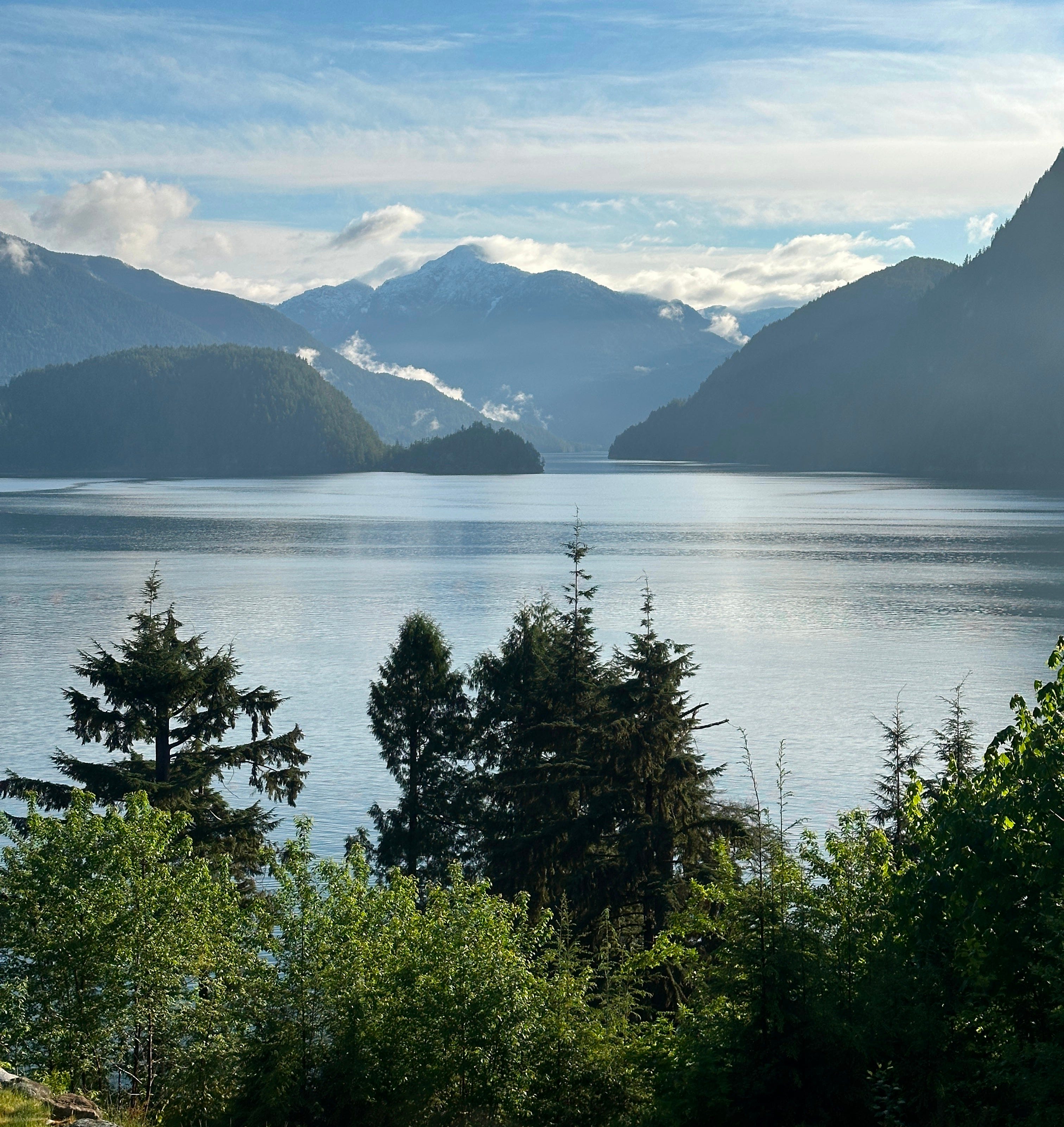
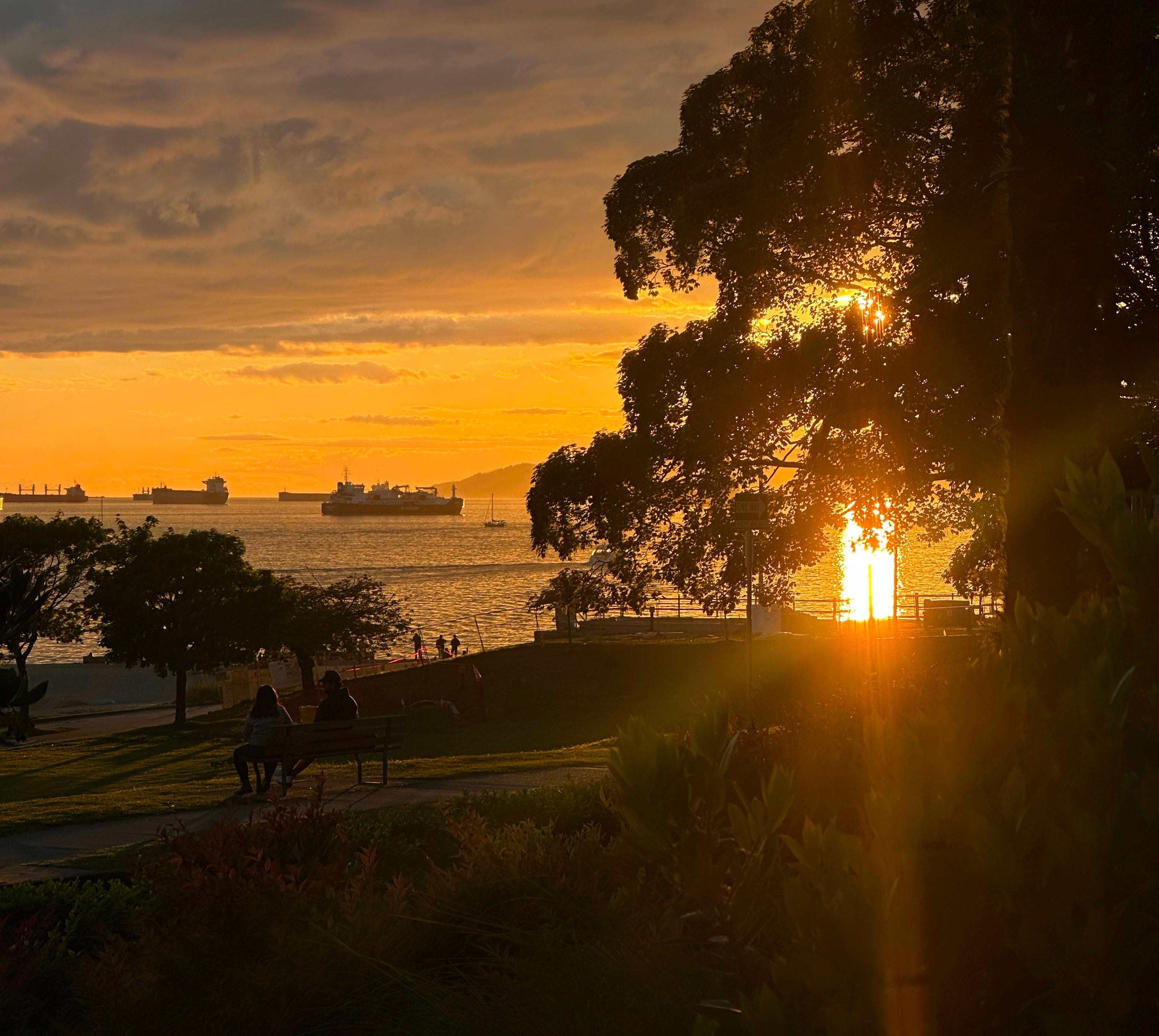
-Sunset margaritas at Cactus Club on Sunset Beach. I know, I know. It’s a chain and yada yada. But, the margaritas are actually good and the spot is unbeatable.
-Inform Interiors. This massive furniture store in Gastown is currently displaying pieces from the collection of Arthur Erickson, Vancouver’s most famous architect. Some very sexy pieces

DEPARTMENT OF GRIEVANCES
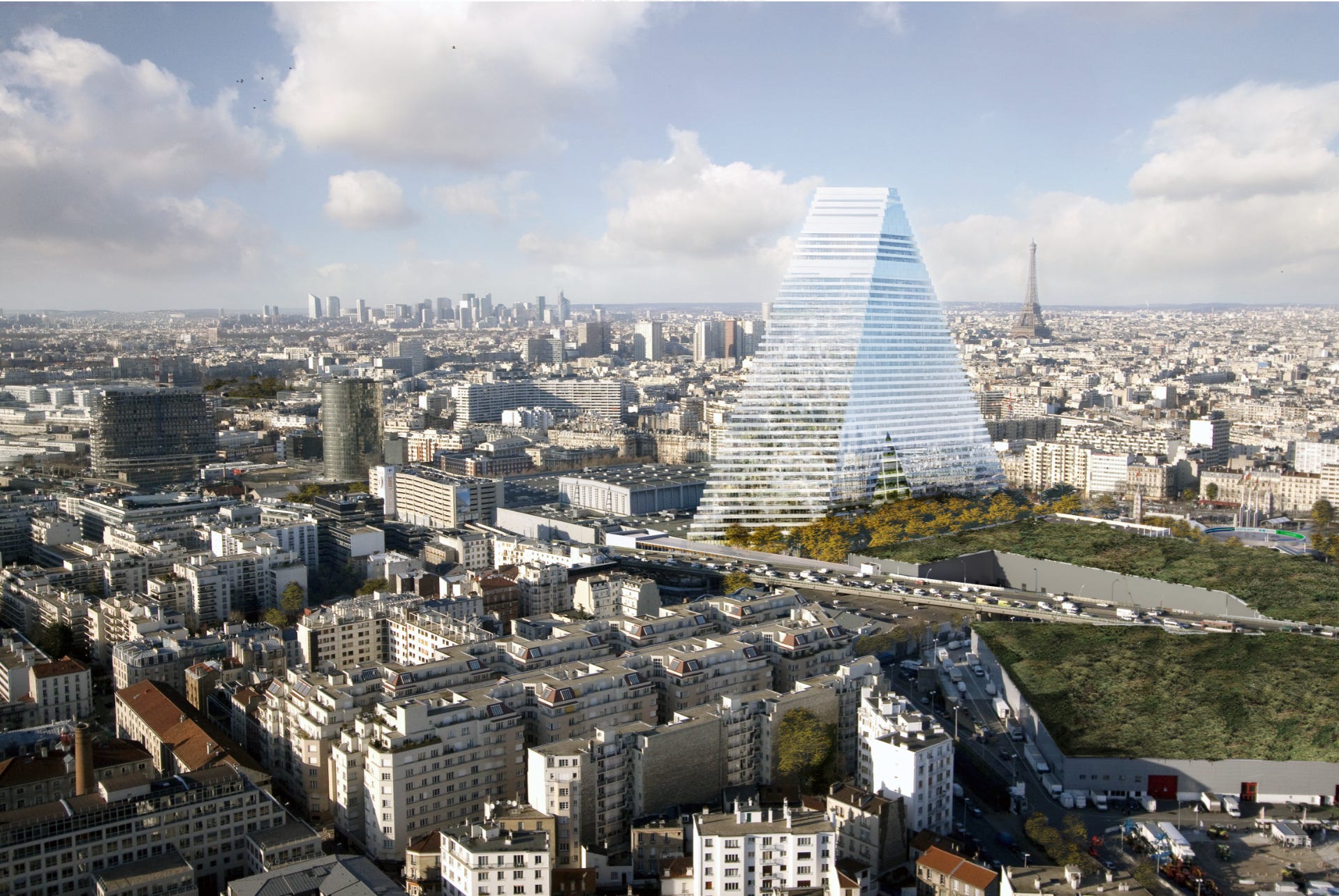
I love a lot of Herzog & de Meuron’s work, although I think the built result often falls short of the render. That being said, I think the Tour Triangle in Paris, which just topped out the other day at 180 meters, is ghastly. Now the third-tallest building in Paris, it just feels unnecessary, uninspired, and something we’ll all laugh about later as we do the Tour Montparnasse.
One of my favorite museums in NYC, the Neue Galerie, announced this week that it is merging with The Met. For the unfamiliar, the Neue holds the German and Austrian art collection of Ronald Lauder and is housed in one of the city’s Gilded Age palaces. I can’t predict what will come of this, though I imagine for the Lauder family, the incentive is knowing that their museum now has a long-term plan they don’t have to handle. I just hope the Met maintains the Neue’s charm.
Doing a prediction piece about anything 20 years from now is sort of a thankless task, but I found the Wall Street Journal’s “Frictionless Security and Supersonic Flights: What Travel Might Look Like in 20 Years” particularly irritating and bad. Surrounded by weekly evidence of the enshittification of tech (my latest experience being that the “gas” tab on Google Maps showed me parking garages in addition to gas stations), it somehow imagines a world in which AI travel agents will handle everything perfectly for us. Even more absurd is the picture painted by Scott Fleming, from Aon. “My agent will know the places I like, it will have insight into my finances, my budget, my risk tolerances, all my preferences from the kind of room I like to my pillow type,” he is quoted as saying. Now, I’d love to know how that matters to the types of hotels 99% of the population travels to. Lol, as if they’re going to spend time and human labor on resolving these things. I can’t even get luxury hotels to match whatever I filled out on their intake form, so I no longer do those.
Then there’s this nonsense: “If a health risk emerges on a route or a flight is disrupted, AI agents will negotiate a solution in real time. The system will monitor conditions continuously, rerouting, rebooking, and adjusting everything so that the traveler never has to make a call or chase a refund.” Every bit of reporting and surveying has shown that airline customers consistently choose to talk to a real person rather than a chatbot when resolving a situation. Why? Because there’s wiggle room with people. Not so with the machines.
Then there’s the idea of the “distributed airport,” which Ty Osbaugh at the architectural firm Gensler tells the WSJ is the future. What is it? Basically, everybody in cities will just go to driverless taxi points scattered around and go through security there. Then they get conveyed to the airport, which will “consist of lean, airside-only gate areas: runways, tarmac and jet bridges that you simply walk onto.” Not sure how he pictures the people who have connections, the infrastructure required to build all these taxi ports in a country where infrastructure takes eons, the large numbers of customers who don’t live in cities, oh and the fact that airport design is currently headed in exactly the opposite direction—ever more massive and inefficient so they can get you to spend more time shopping.
And in case you’re thinking about trusting these “AI” companies like ChatGPT, Anthropic/Claude, Gemini, and Grok, take a look at this paper that was making the rounds lately about how they all pushed their unsuspecting users to take higher-priced flights and other more expensive purchases because they were sponsored and therefore they made money for doing so…
Also, the Musee de Carnavalet (history of Paris museum) is far from underrated these days. Otherwise, a pretty good list from the WSJ.
When I flew to Palm Beach a few weeks ago on JetBlue, I did so by booking it through United, as that’s the airline I have status. I was surprised when checking in, as my boarding group number was bad, among other things. I had to ask the gate agent for something when I got there, so I also asked if there was some issue with my United number. Turns out, the rollout of United’s partnership with JetBlue has been going very slowly. In fact, she said the most common question she gets asked now is from United customers wondering why their ticket doesn’t reflect status. (FWIW, despite booking through United, my mileage earning from JetBlue never came through, and I had to file for missing miles, an act that always makes me feel like I’m scrounging for scraps.) This week, the airlines announced that status reciprocation is finally being rolled out.
I can eat crow when I’m wrong, and today I’m doing so because in JD Power’s 2026 customer satisfaction survey, Southwest topped customer satisfaction despite jacking up bag fees and other unlovable policies!
No company has ever managed to be all things for travel, and I truly don’t think anybody ever will. But that pipe dream has long pushed numerous companies over the years, from Expedia to Kayak to Google and now Uber and Airbnb, to spend lots of money and time doing so. History, though, isn’t my only reason for being skeptical of these Uber and Airbnb’s efforts—I just genuinely don’t understand how they accomplish becoming the “everything app” for travel. Anyways, this Skift column does a really good job laying out just how challenging what they’re trying to do is.
Kengo Kuma seems to be everywhere these days. I’ve found the firm’s projects reimagining the entrance to a historic cathedral and addition to the National Gallery less than pleasing. But I like their winning bid to expand the visitor center for Banff National Park. The existing one is historic but not particularly noteworthy. Yet Kuma’s design respects it without being beholden to it and introduces visitors to an elegant and sleek new center.


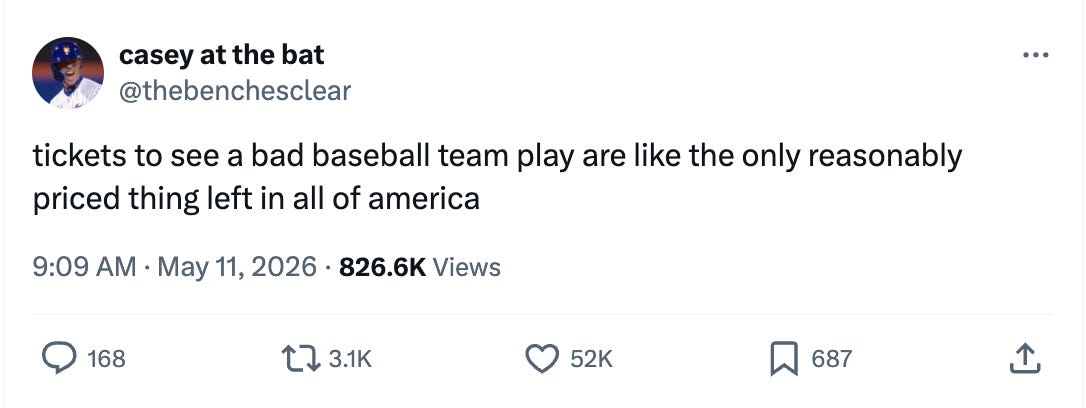
Not sure if this says more about baseball’s popularity, or the state of American entertainment…
I got excited about the premise for this LA Material piece on why restaurants have gotten so loud. I am, after all, in my 30s now, and these kinds of things are suddenly vital questions. I mistakenly thought the writer had cracked the mystery of why they’re so loud, that there was some secret or clever explanation for why LA’s restaurants and bars are noisy. Instead, it was just a survey of different restaurants and their noise level. Oh well.
The story about the five divers (and rescuer) who died during a cave scuba dive is horrifying. Everything about it is messed up. You will never, ever find me exploring underwater caves or swimming through tunnels.
30th Street Station in Philadelphia is one of the most beautiful train stations in the world, and the coffered ceiling is one of the most dramatic one can see. Now its restoration is complete so I feel like I need to pop up to Philly and see it!
The Economist thinks the club with the best sound in the world is in a German suburb.

New York City’s iconic Bubble House may soon be no longer if its new owners don’t like it—it’s not protected. Would be cool if some museum in the city took the facade as a donation and displayed it a la the Met.
STORIES I LIKED OR WISH I’D DONE
While every other major hotel CEO seems to be out there blathering on about AI-this and AI-that or spewing consultant speak, I found this interview/profile in Skift with Peregrine Hospitality CEO Greg Kennealey refreshing and insightful. The firm, formerly known as KSL Resorts, manages or asset-manages properties owned by the private equity firm KSL. So the model is owned-and-operated as opposed to the franchise / management-fee one pursued by the big hotel groups. (I have recently learned that a lot of people don’t know that Marriott, Hilton, Four Seasons, etc., often don’t own the hotel you’re staying in.) I would argue that the decline in owned-and-operated mirrors the decline in brand loyalty and is why these groups have chased an ever-growing list of hotel brands. Kennealey and Peregrine also operate differently by being realistic about the boring and hard-nosed side of the business—operations. There is no sexy tech way out of good service and a well-run hotel, but I suppose that rarely sounds exciting or elicits the gobs of VC money floating out there.
The plague of people leaving behind empty or nearly-empty luggage because of bag fees is something that has completely escaped me, so I enjoyed this column in USA Today that dives into the anecdotal-so-far phenomenon.
An absolute delight! That’s how I’d describe this travelogue in The New York Times tracing Ben Franklin’s footsteps in France. Franklin was the most fun of the Founding Fathers, and I’ve long been remiss in pursuing my own hunt for what remains of the American delegation’s time in Paris, so this piece was very welcome.
Very useful piece in the Washington Post—”How to avoid a terrible restaurant in Rome”—for anybody heading to Rome, or really any major destination in Europe these days. Lots of tidbits that had me nodding, from the red flag of a restaurant with thousands of reviews to a gelateria with colorful gelato piled sky high.
I mentioned it last week, but if you’re into architecture even slightly, you should keep up with Dezeen’s series on parametricism as THE 21st century architectural style. This week, for instance, it tackled Seville’s instantly recognizable Metropol Parasol.
TRAVEL INDUSTRY NEWS
Southwest Airlines bans humanoid or animal-like robots
Abu Dhabi’s Sphere will be located on Yas Island
United unveils new direct flight to Japan’s ski region
The Venus Grotto at Ludwig II’s Linderhof Palace in Bavaria has reopened
Montreal strippers plan walkout for F1 weekend
The EU unveiled a plan for single-ticket train booking across the continent
The Smithsonian Castle reopens this coming week
Your meditation on underrated destinations struck me. Stepping off the beaten path reminds me of shifting outside the line of dance—discovering intimacy and nuance where few look.
Vancouver is on my bucket list - bookmarking these tips for when I eventually make it!